How to Serve in Padel: Step-by-Step for Beginners
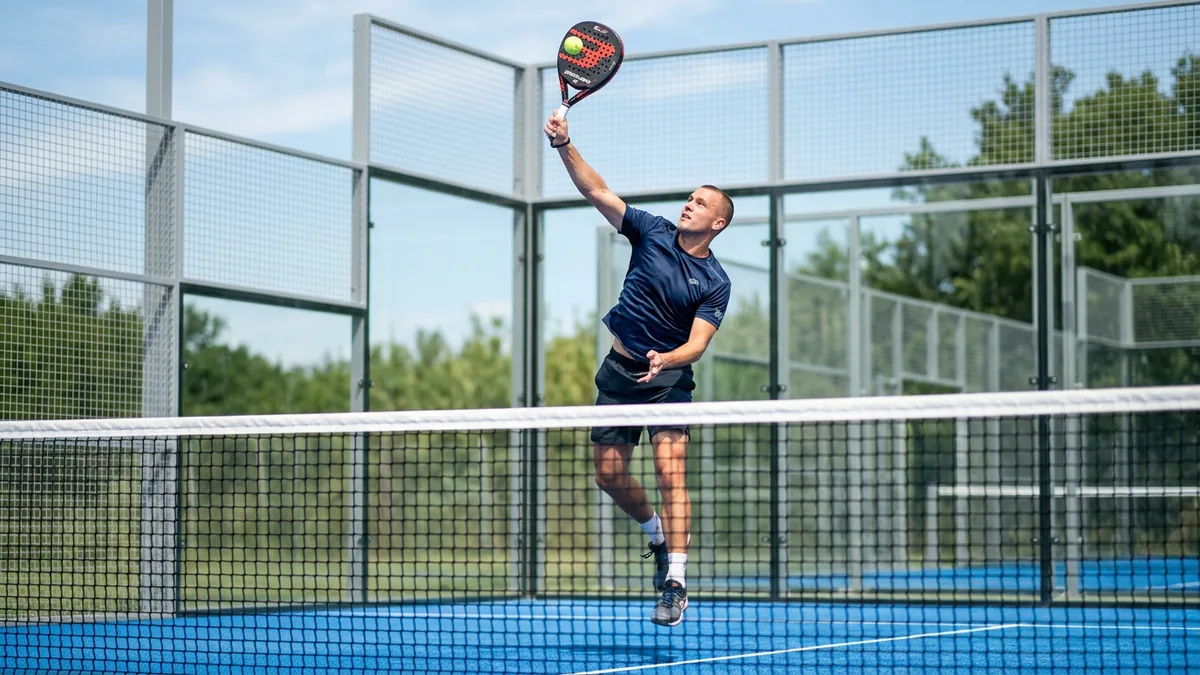
In tennis, the serve is a weapon — a cannonball blasted at 200 km/h that wins points outright. In padel, the serve is something else entirely: a legal, underhand restart designed to get the point going, not to end it.
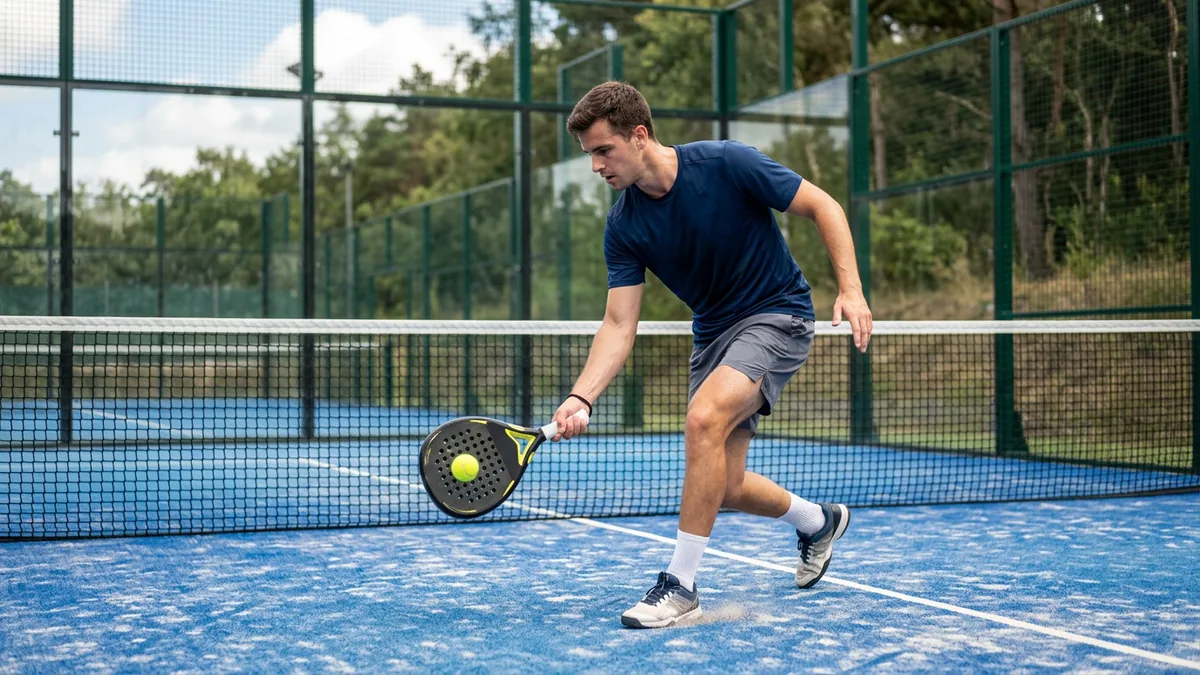
That’s great news for beginners. You don’t need power or years of practice to serve well in padel — you need correct technique and consistency. Master the basics and you’ll hold your serve against players far stronger than you.
First, the Rules That Define the Serve
The serve follows specific rules — worth reviewing how scoring and faults work before stepping on court. Read more about the court setup here
The padel serve is the most regulated shot in the sport. Get these five rules right and you’ll never be called for an illegal serve:
| Rule | Detail |
|---|---|
| Underhand | The ball is struck below waist level, never overhead |
| Bounce first | The ball bounces behind the service line before you hit it |
| Diagonal box | The serve must land in the diagonally opposite service box |
| One bounce | The ball bounces once in the box before the receiver plays it |
| No walls | The ball cannot touch any wall before landing in the box |
A note on order: in doubles, each player serves their own full game, and the serve rotates through the two players on each team game by game. Keep your own rhythm and routine — serving well is as much about calm repetition as it is about technique.
Step-by-Step: The Beginner’s Serve
Step 1: Grip and Stance
Use a continental grip — imagine you’re shaking hands with the racket handle. Stand sideways to the net with your feet shoulder-width apart, both feet behind the service line. Your non-dominant shoulder should point roughly toward the box you’re serving into, and your weight should be balanced and relaxed.
Step 2: Position and Ball Bounce
Stand about 20–30cm behind the service line so a slight forward step won’t put you over it. With your non-dominant hand, drop the ball in front of you and let it bounce once on the court. The ball must bounce behind the line — a serve hit before the bounce is illegal.
Step 3: The Underhand Strike
As the ball rises from its bounce, swing the racket in a smooth pendulum motion, like you’re bowling or throwing underhand. Make contact below waist level, slightly in front of your body, with the racket face slightly open. Brush up through the back of the ball to add a little slice — that topspin-free, low-bouncing delivery is what makes the padel serve effective. Keep it smooth; power is not your friend here.
Step 4: Aim and Follow-Through
Aim for the deep corner of the diagonal box — a serve that lands near the back corner pushes your opponents toward the glass and sets up a weak return. Follow through forward and up toward your target, letting your weight transfer onto your front foot. Finish balanced and ready to step into the court.
| Step | Focus |
|---|---|
| 1. Grip & stance | Continental grip, sideways, both feet behind the line |
| 2. Bounce | One bounce behind the line, slightly in front of you |
| 3. Strike | Below waist, in front of the body, pendulum swing |
| 4. Aim & follow-through | Deep corner of the diagonal box, balanced finish |
Common Serve Faults (and How to Fix Them)
Even experienced players slip into bad serving habits. Here are the four most common faults and the fix for each:
| Fault | Cause | Fix |
|---|---|---|
| Foot fault | Stepping on or over the line | Start further back; keep both feet behind until contact |
| Hitting above the waist | Swinging too high | Keep the contact point below your belt line |
| Serve hits the wall | Too much pace or angle | Aim lower over the net and ease off the power |
| Serve lands out of the box | Poor aim or rushed swing | Slow the swing, aim at the corner, not the center |
One more trap: a serve that clips the net and still lands in the correct box is a let — you replay it with no penalty. But a serve that hits the net and falls back on your side is a fault, and you lose the point.
Practice Drills for a Reliable Serve
- The 10-bounce drill: stand behind the line and practice just the bounce-and-strike rhythm ten times, focusing on waist-level contact. No aiming — just feel.
- Corner targets: place two markers in the corners of the diagonal box and serve until you hit each corner five times. Alternate boxes every ten serves.
- The quiet-serve drill: serve ten balls with the goal of making zero noise — a soft, brushed contact. If you can serve gently and accurately, adding pace later is easy.
A consistent serve is the foundation of a solid game. Once you can place the ball deep into the diagonal box with a relaxed, repeatable swing, you’ve done more for your game than any power shot ever could. The next step is making sure your equipment helps rather than hinders: a racket’s balance and weight affect how naturally that pendulum swing feels, so choosing the right racket for your arm and playing style will make every serve — and every shot after it — noticeably more reliable.
Frequently Asked Questions
What is a legal serve in padel?
The ball must bounce once, then be struck below waist level with an underhand motion. It must land in the diagonal service box and hit no walls first.
Why is the padel serve underhand?
The underhand serve keeps rallies going and reduces the serve's advantage, making points longer and more tactical.
Not sure which racket is right for you?
Our AI analyzes your playing style and recommends the perfect racket — in under 2 minutes.
Try the Racket Finder →